

The History of Ship Passenger Lists
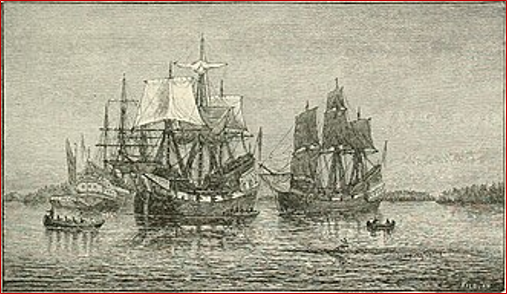
In today’s blog we trace the history of ship passenger lists from the earliest colonial era (1607) to the mid-twentieth century (1954). We’ll see how ship records changed over time and why genealogists rely on them. The big picture is the shift from scattered arrival references to standardized federal manifests with increasing genealogical value.
Why Ship Passenger List History Matters
Passenger lists are core immigration sources. They link arrival, identity, and family history as well as reflect the social and political attitudes of the time. As is true for all records of genealogical value, the important things to consider for any record are the agency who created the records, and for what purpose records were created. In order to get the most of out of records not created for genealogists (and that’s ALL of them), we have to know which entity created them and for what purpose. This helps to explain the content of the record and why it was required or requested.
The major seaports in the British colonies and then the United States were Boston (1630), Philadelphia (1682; rivaled Boston for a time), Philadelphia (1682), New Orleans (1718), Baltimore (1729), and New York. Over time, smaller ports grew up along the Atlantic seaboard and Gulf Coast. Philadelphia rivalled Boston for a time. New Orleans was founded by the French in 1718; controlled by Spain 1762-1803; and sold to the US in 1803. Baltimore was the best protected deep-water port and was the closest east coast port to the Midwest. New York was not a leading port until the Erie Canal opened in 1825; from 1855-1890, immigrants arriving in New York came in through Castle Garden.
Passenger records evolved in stages. They did not begin as a single national system. Before January 1820, passenger documentation was fragmented. It depended on individual colonies, ports, and/or ship captains, so surviving records before 1820 are uneven. The big turning point came in 1820, when the Steerage Act of 1819 required passenger manifests, creating the first consistent federal arrival records. After 1891, immigration law made records more detailed and more bureaucratic. That’s why later manifests can provide richer information about identity, family ties, residence, and intended immigrant destinations. By 1954, the classic ship passenger-list era had largely given way to a broader modern immigration system that also included air travel and border documentation.
Why So Much Detail?
Passenger lists grew more detailed as the federal government took over. Administrative control increased, and recordkeeping became more bureaucratic and standardized. After 1820, passenger lists became mandatory and customs officials and ship masters had to standardize what was recorded. Also, the immigration law changed. The Immigration Act of 1891 and later rules required more information to be collected about arriving immigrants, and officials needed better identification. More details such as age, occupation, last residence, destination, and relatives helped distinguish people with similar names. Additionally, public health and exclusion concerns grew, especially about immigrants from Eastern and Southeastern Europe. Late nineteenth-century authorities wanted to screen for disease and other grounds of exclusion.
Colonial Beginnings: 1607-1789
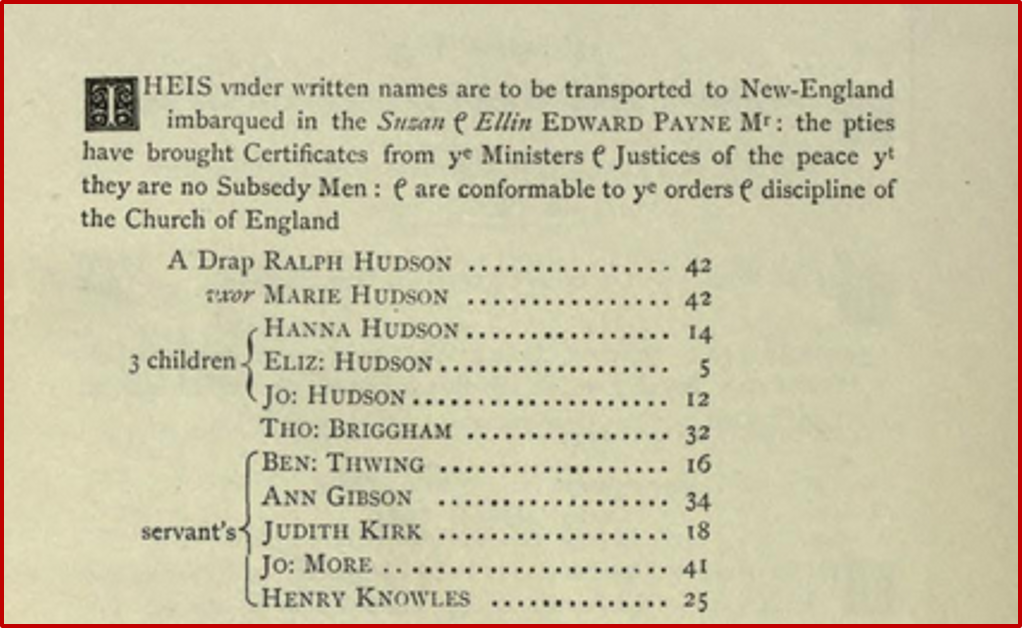
Colonial beginnings show fragmented pre-federal recordkeeping of passenger arrivals. Many early (1600s) lists of passengers arriving in colonies were produced in published sources. Given the absence of a coherent registration program at the colony/state level, immigrants disembarked at various ports of entry “officially” unnoticed, dispersing to their destinations unchallenged except for the demand that they swear oaths of allegiance and supremacy to the English monarch.
Immigration didn’t take place in administrative vacuum, so it’s not surprising that a small number of passenger arrival records came into being on their own account or emerged, uncertainly, from the first tentative efforts at regulation. Even for ships carrying original colonists, there are few actual lists of passengers, certainly few that are undisputed. Certain records serve as substitutes, such as headrights, contract servitude in Pennsylvania, letters of denization and naturalization for foreign-born Protestants, and muster rolls/militia lists that identify soldiers’ places of origin, etc.
Philadelphia created the best known passenger arrival records of this period. It was the ost active port in colonies and the home of the largest body of passenger arrival records of the pre- and post-Revolutionary periods. Philadelphia began registering foreign arrivals earlier than the federal system, starting in 1727 for arrivals from outside the British Empire. Those records continued, in some form, into the Revolutionary Era and later pre-1820 period.
Early Federal Period: 1789-1819
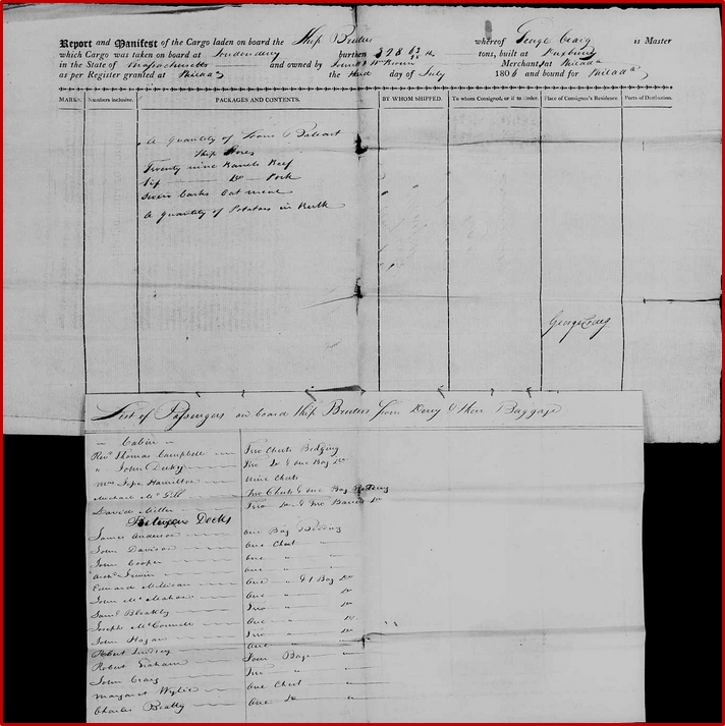
Documentation immigrants entering the US varied significantly from 1789-1819. Not until January 1, 1820 did the federal government require captains or masters of vessels to present passenger lists to officials. The Customs Bureau oversaw ports starting in 1789. As a general rule, the National Archives does not have passenger lists of vessels arriving before January 1, 1820. Except for New Orleans (1813-1819) and Philadelphia (1800-1819), it’s hard to find federal documentation of immigrants during this period.
Federal Manifests: Customs Passenger Lists, 1820-1891
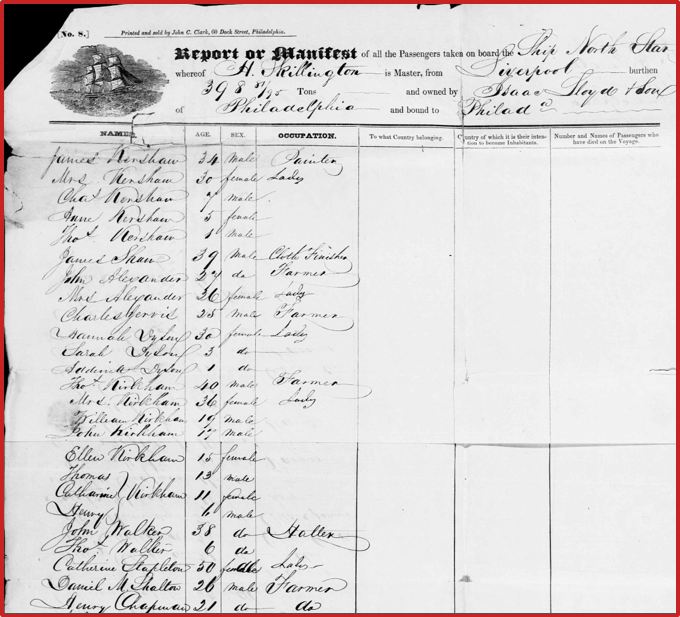
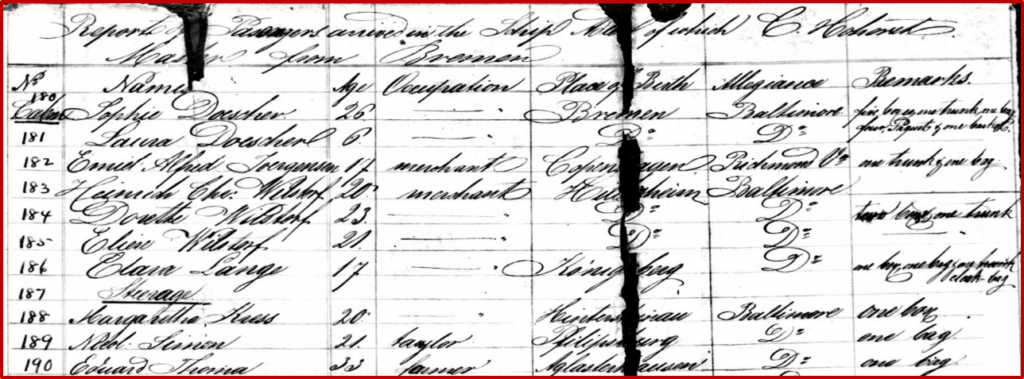
The 1819 Steerage Act changed the way the federal government tracked immigration. It required the master of a ship to provide a manifest of passengers boarded at foreign port. It also required each vessel to carry a specific quantity of provisions for each passenger with entitlement to compensation should supplies prove deficient. Lists prior to the 1880s rarely provided immigrant’s hometown, and most lists were created in the US rather than at port of origin. These were known as customs lists because at that time the Treasury Department oversaw such matters. US Customs collectors at each port collected passenger manifests as well as cargo manifests and “customs manifests,” these lists were to provide each passenger’s name, age, sex, occupation, and nationality. Customs effectively decided what had to be recorded because manifests were part of port-entry administration and not yet a fully separate immigration bureaucracy.
Nineteenth-century lists often contain the port of departure; port of arrival; date of arrival; name of ship; country, province, or town of origin; name of immigrant (and family members’ names if they traveled on the same ship); age and sex of immigrant; occupation; and destination of immigrant.
Expansion and Standardization, 1850-1890
This period experienced continued growth in transatlantic migration. Passenger listss become more detailed, and ports, especially New York, generated large numbers of manifests. Forms became standardized and lists become major and reliable source for tracing immigrants
Federal Manifests: Centralization and More Detailed Immigration Records, 1891-1954
The Immigration Act of 1891 clarified and centralized the immigration enforcement authority of the US government. It created the Office of Immigration within the Treasury Department to oversee immigration inspectors at ports of entry. From then on, US immigration officials gathered all passenger manifests, now known as “immigration manifests,” named after the agency collecting them. The Act extended immigration documentation to the Canada and Mexico land borders and expanded the list of excludable and deportable immigrants like polygamists, persons convicted of crimes of moral turpitude, and disease sufferers. It introduced additional documentation on the lists to verify identification and admissability and created a provision for medical examinations. An interesting note: Approximately forty percent of foreign passengers arriving in Canada were actually bound for the US, so the creation of border crossing records began capturing a large pool of immigrants that likely would not have shown up on previous arrival documents.
Format and Completion of Manifest Forms
As immigration laws increased information collected on manifests, successive legislation imposed specifications on the format and completion of manifest forms. The Immigration Act of 1903 required listing immigrants in “convenient groups” of no more than thirty names per page. Immigration officers interpreted “convenient groups” to be members of the same family or those coming from the same town or village. The Act also mandated the practice, for inspection purposes, of issuing passengers numbered tickets corresponding to the page and line number where their name appeared on manifest.
Transportation companies had to provide the manifest forms. Regulations under the Immigration Act of 1917 mandated the forms’ size, color, and quality of paper and all immigration manifests were to be typed or printed in English. Typed manifests were to use 36-by-18 1/2-in. sheets designated as Form 500. Different colored forms applied to each class of passengers: first class on pink manifests (Form 500), second class on yellow (Form 500A), and steerage on white (Form 500B). Printed sheets were to be either 36 by 18 1/2 in. or 18 by 18 1/2 in. Smaller sheets were Form 630 (pink), 630A (yellow), and 630B (white). The Bureau of Immigration also furnished transportation companies with blank books to prepare alphabetical indexes and facilitate reference to the manifests. It’s unclear when the Immigration and Naturalization Service first provided such index books, how long they did so, or if it intended for company to submit index with manifest.
Content of Immigration Passenger Lists from 1891-1906
After the establishment of the Office of Superintendent of Immigration, customs passenger lists were renamed as immigration passenger lists. They typically included more information than earlier customs passenger records, and they draw an interesting picture of emigrant life aboard immigration ships. This data include, but is not limited to: port of departure; port of arrival; date of arrival; name of ship; nationality of immigrant; name of immigrant (and family members’ names if they traveled on same ship); age and sex of immigrant; occupation; whether immigrant had been to the US before; final destination of immigrant; if passenger was joining a relative, name of relative and where person lived; who paid for passage; and amount of money immigrant had. After 1906, physical description of immigrant and place of birth may have been included.
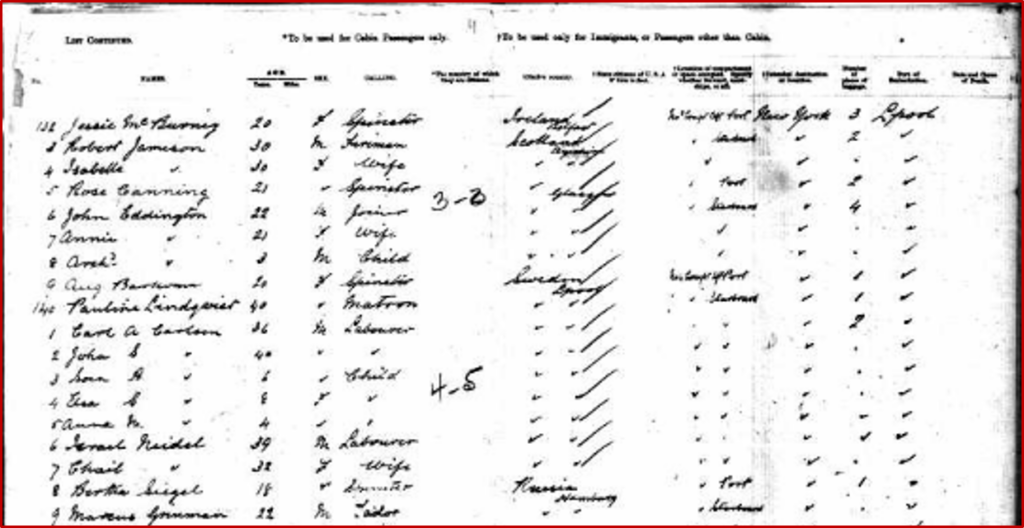
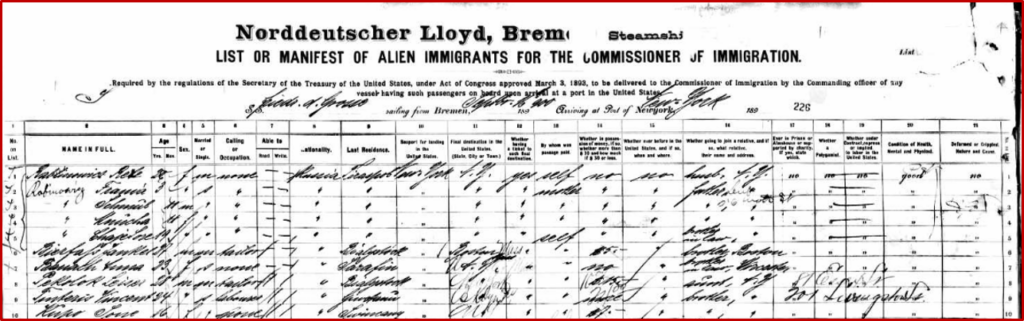
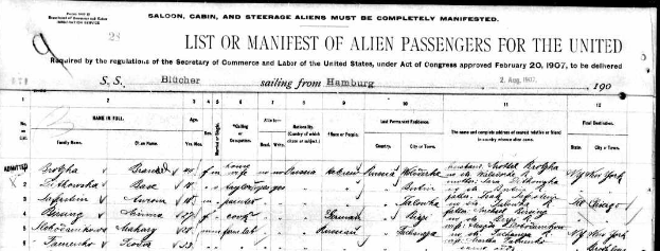
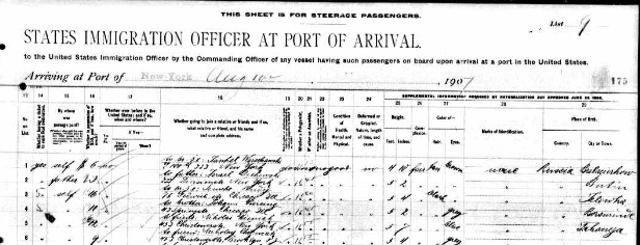
Fig. 7. SS Blücher, August 14, 1907. After 1906, physical description of immigrant and place of birth were included.
Interwar and Quota Era, 1924-1945
After passage of quota laws in the 1920s, immigration policies became more restrictive and arrival lists more controlled. The lists still tracked arrivals, but the policy shifted from mass immigration to quota management and inspection. Specifically it was the Immigration Act of 1924 that changed everything in the world of US immigration records. New columns appeared on US passenger lists.
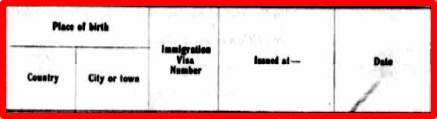
Beginning July 1, 1924, everyone arriving at a US port of entry needed some sort of entry document. US citizens needed their birth record or their naturalization certificate. Non-citizens needed one of a variety of documents depending on their purpose. Immigrants coming to live permanently in the US needed immigrant visas. The only immigrants to pass through Ellis Island were displaced persons or war refugees. These mandates turned passenger lists into enforcement records and made arrival lists more administratively coded, adding marks, abbreviations, and references to sections of the law directly onto the manifest.
Specifics on content changes include columns requiring a quota immigrant visa (QIV), non-quota immigrant visa (NQIV), re-entry permit (RP), or passport visa (PV) notations. Inspectors could also write references to specific parts of 1924 law to indicate why person was admitted or delayed. Lists became less like simple arrival rosters and more like immigration enforcement documents. However, for historians and genealogists, added codes are extremely useful. They often reveal whether a person entered under quota rules, whether they were returning, or whether their case involved special exemption categories. Like the content in other records, the content of a passenger list can provide clues for genealogists to use to locate additional information.

1954: End of the Classic Ship-Manifest Era
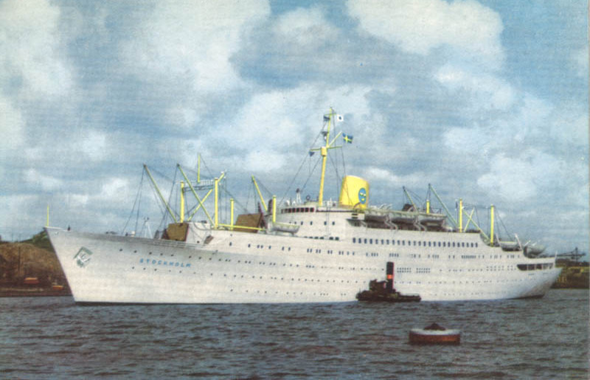
Postwar, passenger arrival records exist but the immigration system increasingly modernized. It became less centered on the classic steerage manifest tradition. Air travel and new documentation systems overlap with traditional ship manifests. Consequently, on November 12, 1954: Norwegian sailor Arne Pettersen became the last processed foreigner to depart Ellis Island, leaving on the M.S. Stockholm on February 16, 1955.

Resources and Further Reading
For more information on the history of American ship passenger arrivial lists, look for these resources:
- Tepper, Michael. American Passenger Arrival Records: A Guide to the Records of Immigrants Arriving at American Ports by Sail and Steam. Updated and Enlarged. Baltimore: Genealogical Publishing Co., 1993. Examines records in their historical and legal framework. Explains what they contain and how to find and use them.
- Meyerink, Kory L. and Loretto Dennis Szucs. “Immigration: Finding Immigrant Origins.” Chapter 13 in The Source: A Guidebook of American Genealogy. Rev. ed. Edited by Loretto Dennis Szucs and Sandra Hargreaves Luebking. Salt Lake City, UT: Ancestry, Inc., 1997. See especially pp. 463-472, “Immigration Records: Passenger Lists.”
- Smith, Marian L. “The Creation and Destruction of Ellis Island Immigration Manifests: Part 1” and “Part 2”
- National Archives, “Passenger Arrival Records”
A foundational overview of U.S. passenger arrival records that explains the transition from pre-1820 fragmentary records to the federal passenger-manifest system and later microfilmed and digital holdings. - National Archives, “Immigration Records”
A broader guide to federal immigration records that places passenger lists within the larger history of US immigration documentation and record preservation. - National Archives, “Passenger Manifest Annotations”
A focused source for interpreting the handwritten notes, codes, and later additions that appear on twentieth-century passenger manifests. - JewishGen, “Manifest Markings: A Guide to Interpreting Passenger List Annotations”
Comprehensive reference guide to interpreting markings, or annotations, found on immigration passenger lists. Written for researchers with a US passenger list in hand.




Recent Comments