
Category: Local History

Making the Most of Muster Rolls

It’s no secret that military service generated records. When genealogists think of military records, the first type that usually comes to mind is pension records. Why? Because of all military records, the pension application doesn’t simply reveal a soldier’s military service; it also gives critical genealogical information about the applicant, who could be the soldier, his widow, his children, or other legal claimant to a military pension. In some cases, a pension file can contain applications by one or more of these persons. The muster roll, however, is different, and often overlooked. This is because muster rolls are thought of as just lists of names of men who served in military units under certain officers, something akin to a schoolroom roll call. But they can be much more than that, and should be on your research checklist when you have ancestors who served in the military. Before You Start To...

Getting to Know You: Connecting with Your Ancestors Through Social History

This month, guest blogger Linda Stufflebean shares her genealogical experiences connecting with ancestors through social history. She will introduce herself, after which she will tell her story and provide valuable information you can use to connect with your own ancestors. I’m Linda Stufflebean and I have been a family history researcher since 1979. Most of my friends would agree that I’m totally obsessed with genealogy. In addition to doing some professional work, I have been a volunteer teacher in Tucson, Arizona since 2010. Through the years, I have visited numerous repositories, court houses and cemeteries in the quest for details about the lives of my ancestors. Of course, there have been brick walls along the way. I have been fortunate to find ways to knock down – or march around – many of them and decided to focus my blog, www.emptybranchesonthefamilytree.com on both methodology and education.  Please take a minute...

Locating and Using School Records for Genealogical Research

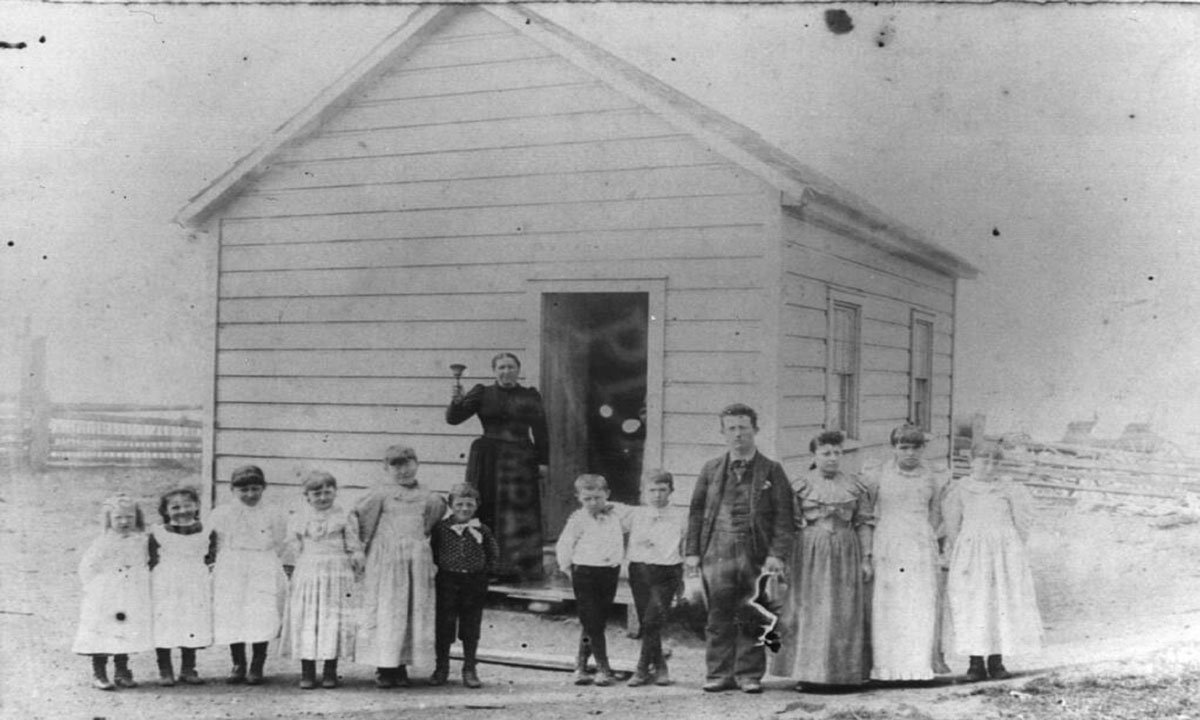
School may be out for summer, but genealogists should still know how to find and use school records! Today’s blog will discuss the ABCs of school records in genealogical research and offer some great online resources. American schools date back to the earliest days of colonial settlement. The Boston Latin School, established on April 23, 1635, was the first school in what is now the US, and it still operates today. Modeled after the Free Grammar School of Boston, England, it was a boys-only public secondary school, led by schoolmaster Philemon Pormont, a Puritan settler. Courses were strictly for college preparation; they were centered on the humanities and included Latin and Greek. The most famous alumni of the school were John Hancock and Samuel Adams. Benjamin Franklin had to drop out after two years because his father could no longer afford the cost. When searching for records, consider all schools,...

A “Shirt factory at Grapevine”: How the WPA Provided Work for Grapevine Women during the Great Depression

Continuing our focus on how Grapevine dealt with the Great Depression, today we look at the Grapevine sewing room and how it developed. Sewing room projects were under the Works Progress Administration (later Work Projects Administration) (WPA), established on November 1, 1935 to provide work to unskilled women and to get them ready for private work, as well as to supply goods to a non-competitive market without purchasing power. Sewing rooms became the backbone of the women’s division of the WPA. On February 12, 1935, Mayor B. R. Wall “Signed [a] contract with Government for Shirt factory at Grapevine.” Later known as the Grapevine Sewing Room, it was located at 413 S. Main in the north half of the old City Hall, and it served as a means of employment for many Grapevine-area women during its existence. The room was prepared for use by local residents E. L. Jordan, who...

The New Deal Comes to Grapevine: History of the School the WPA Built

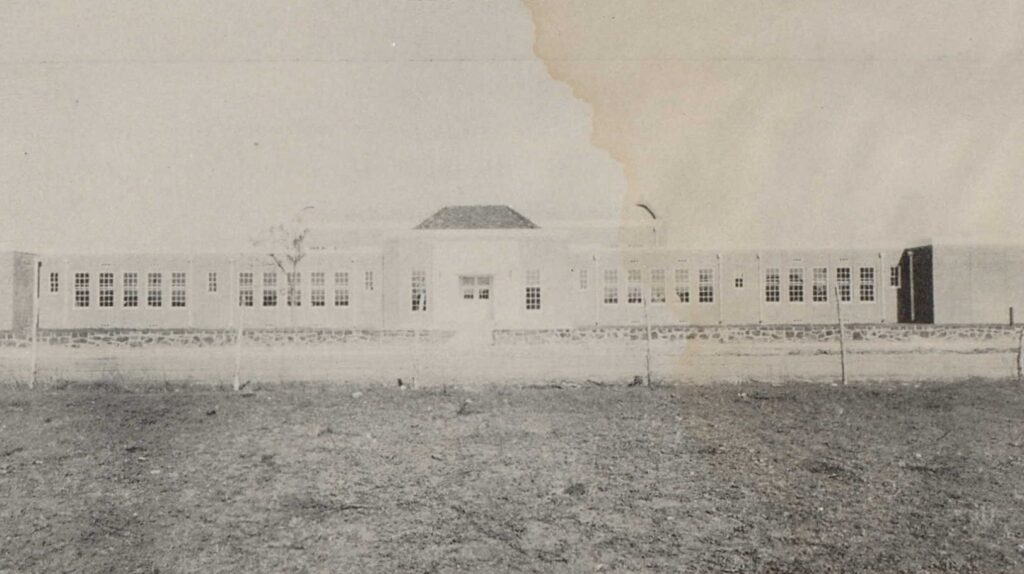
In a past blog we looked at back-to-work initiatives generated during the Great Depression by President Franklin D. Roosevelt’s New Deal. Most of the funding of Grapevine’s New Deal projects became available through the Works Progress Administration (WPA). These included a canning factory, a sewing room, a new grammar school building, a renovated high school, a new homemaking education building, and the Soil Conservation Service (SCS) Office. The Public Works Administration (PWA) provided funds for a water project. The canning factory story is covered in the August 2024 edition of the Grapevine Historical Society newsletter On The Vine (”Yes, We Canned!”), so be sure to check it out. Today’s blog will discuss the history of the Grapevine school the WPA helped to build. Grapevine had just incorporated in 1907. In 1908 the town first voted a bond issue of $12,000 and a fifteen-cent maintenance tax for a two-story red brick...

Buried Treasure in Underused, Little-known, and Untapped Civil War Resources!

In today’s blog we’re going to explore some underused, little-known, and untapped Civil War resources you can use to significantly enrich your family history. Most researchers are familiar with military pensions and service records, but the war generated many more records that you may not be aware of, and not all of them were official government records. Supplement to the Official Records of the Union and Confederate Armies This set of 100 volumes, edited by Janet B. Hewitt, supplements the Official Record of the Union and Confederate Armies (Wilmington, NC: Broadfoot Publishing Co., 1994-2001). The Supplement is divided into four parts (Reports, Records of Events, Correspondence, and Secret Service) and includes official accounts of battles, skirmishes, scouting expeditions, signal maneuvers, narratives of troop movements, correspondence, and intelligence files (Fig. 1). Also included are a few courts-martial, courts of inquiry, and court proceedings. Some of the material is specifically referred to...

Law and Order (and A Little Disorder) in Early Grapevine

The first law enforcement In Texas, Constable Thomas Alley, was sworn in by Judge John Tumlinson on March 5, 1823. A second constable joined Alley a short time afterward. Three months later, Alley and his colleague stayed to protect the local colonies while ten other men (including Tumlinson) were sent out to protect the range and guard the frontier. These men later formed the Texas Rangers. The Constables and Rangers joined forces and became an active group of roughly two hundred men. When the original Texas constitution was adopted, the constable was the only law enforcement defined by the document. Sam Houston formally separated the two groups. The constable would be elected by the people in each local area, known as precincts. The Texas Rangers became officers of the Republic of Texas. Both groups would be commissioned and report directly to the governor. Today that still holds true. When Tarrant...

Charles Wall: Grapevine’s Indiana Jones

You may be familiar with the fictional move character Indiana Jones, played by actor Harrison Ford, who became involved in various, sometimes hair-raising adventures around the world. The small community of Grapevine, Texas can claim title to somewhat the same type of individual in the person of Charles “Charlie” Wall, who left home in the Pleasant Run Community about 1876 and returned in the mid-1890s. Few documents exist to provide evidence of Charlie’s travels; some evidence is anecdotal; some sources contradict each other, and some are plain incorrect. In fact, he refused to tell his story for twenty-five years afterward because he was certain that nobody would believe him. Nevertheless, Charlie’s story demonstrates how the evidence we have allows us to understand how an ordinary resident of a small Tarrant County community experienced a wider and wilder world during the late nineteenth century. Charles Wall was born in Madison Co.,...

Genealogy and The Great Depression

(Credit: U.S. National Archives and Records Administration, Public Domain, https://commons.wikimedia.org/w/index.php?curid=16629774) Oh, say, don’t you remember, they called me AlIt was Al all the timeSay, don’t you remember, I’m your palBuddy, can you spare a dime? Source: LyricFind – Songwriters: E. Y. Harburg / Jay Gorney – Brother, Can You Spare a Dime? lyrics © Songtrust Ave, Sony/ATV Music Publishing LLC US government responses to the Great Depression of the 1930s generated some unique resources for genealogists and family historians. Today we’re going to look into some genealogically valuable records generated as a result of President Franklin D. Roosevelt’s New Deal and see how they can be used to enhance family history research. We need to look for these records for two main reasons. First, the Depression was an all-encompassing event that changed family narratives. Second, how relatives responded to or weathered such a crisis formed an essential aspect of family history....

Ancestors Fall on Hard Times? Check Out the Poorhouses!

(Wythe Co. poor farm image credit: By Nyttend – Own work, Public Domain, https://commons.wikimedia.org/w/index.php?curid=57704286) What is a poorhouse? Simply put, it’s a county- or town-run residence where paupers were supported at public expense. It was known by several names – almshouse/alms house, poorhouse/poor house, poor farm, county farm, county home, and workhouse. And it’s possible that an ancestor or other family member may have spent some time in one. American poorhouse resources are little-known or vastly underutilized. According to Linda Crannell, formerly known as “The Poorhouse Lady, “The poorhouse seems to remain so invisible to us today. This is despite the fact that the poorhouse was probably one of the most extensively publicly document institutions in 19th century America.” These institutions have not been places that genealogists would normally think to look for when dealing with “disappeared” ancestors. This blog will demonstrate the value of poorhouse research, availability of poorhouse...