

Researching Indentured Servants
Introduction
Indentured servitude was a major contract labor system in early colonial America, especially in the Chesapeake, before declining in the late seventeenth and eighteenth centuries as African slavery expanded. Servants worked for a fixed term in exchange for passage, food, shelter, and freedom dues. The system was common in English North American colonies from the early seventeenth century. It was not slavery, but a form of unfree labor that limited autonomy and tied labor to debt repayment and migration costs.
Indentured servitude developed because the colonies needed labor, and passage to America was expensive. English promoters saw colonies as a solution to social and economic problems at home. The labor shortage after settlement, especially in Virginia, made indentured labor attractive to planters and colonial companies.
In 1717, the British Parliament adopted a policy of transportation which banished convicts to the American colonies, usually for seven years. This policy allowed them to be bought and sold as indentured servants during their sentences. They were subject to a master’s discipline and could be sold to other masters. Neither men nor women could marry until they completed or purchased their service contracts, and they could be placed in servitude by the action of a county court. In Frederick Co., Maryland in 1773, a female servant was adjudged for bastardy, having a child “begot by a Negro.“ The mulatto daughter was considered to born free because that was her mother’s racial status. However, the white mother was sold for seven years of servitude, but her eleven-month-old daughter was sold as servant to serve until age thirty-one.
Terminology of Indentured Servitude
When researching ancestors who were indentured, learning the vocabulary is important. Following are some words you’ll like come across:
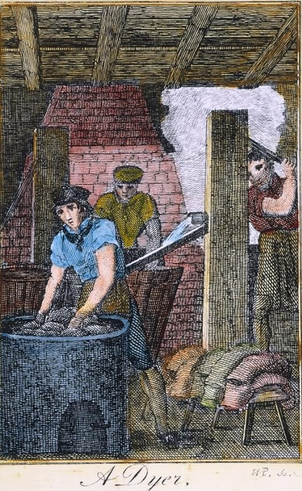
- Apprenticeship: Usually a young male entering into a contract of indenture in order to learn a trade. The contract would last for a specified time period in which he learned the necessary trade skills. He would also promise to keep trade secrets.
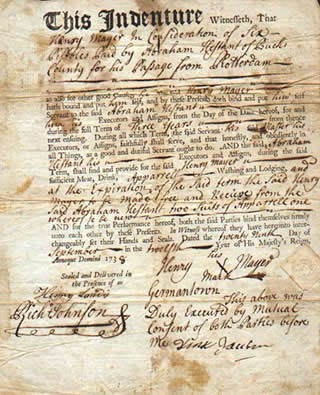
- Indenture Contract: A legal document describing one person’s agreement to pay another’s debt in exchange for labor over a specified time period. It applied to both servants and apprentices.
- Indentured Servant: A person – woman, man or child – who owes a debt to a master. The debt is paid by working a specified number of years for this master. The contract detailing the arrangement of debt payment was usually negotiated by the ship captain who carried the person to colonial America. The agreement would be signed before departure.
- Redemptioner: At the time a redemptioner was someone who traveled to colonial America without an indenture contract. On arriving, the redemptioner would have to pay cash or negotiate their own contract of indenture with the ship captain to pay for their passage.
Early Growth in Virginia and Maryland
Indentured servitude in America began in Virginia and Maryland, firstly after Jamestown. It ecame especially important in the Chesapeake. Many newcomers arrived under indenture. The thriving Chesapeake tobacco economy made labor demand constant, and indentured servants filled that need in large numbers. Servants were recruited through printed advertisements and brokers, and contracts could be made before departure or after arrival, including “redemptioners.” This system operated across the Atlantic world, with contracts, shipping arrangements, and portside labor markets all playing a role
Terms of Service
Indentures usually four to seven years. Pennsylvania law established these regulations for indentured servants without contracts. Masters of such servants had to “bring such Servant or Servants within three months time after their arrival before said Courts to be adjudged.” Masters provided room, board, clothing, and supervision, and servants often received “freedom dues” at the end of their contracts. The promise of freedom dues made servitude a path to eventual independence, though in practice the conditions were often harsh.
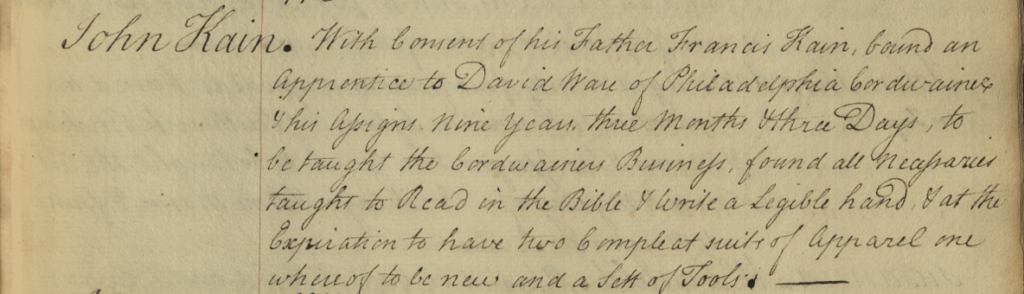
Below is an example of an indentured apprentice. In the 1770s, John Kain was apprenticed by his father Francis to David Ware of Philadelphia for nine years, three months, and three days, to be taught the trade of a cordwainer (someone who made luxury, high-quality footware from scratch with new leather). John was also to be taught to read the Bible, to learn to write, and to receive at the expiration two full suits (one of them new) and a new set of tools.
Life during Servitude
Indentured servants often endured hard labor and limited personal freedom. They experienced high mortality, especially in the Chesapeake and port cities. They had few legal protections and their contracts were enforceable by colonial courts. They could also be sold, leased, punished, or sued depending on local law and contract terms, but they did have some recourse. Colonial legislatures codified servant laws and developed rules for runaway servants, pregnancy, certificates, and term lengths. By the mid-seventeenth century, indentured servitude had become a regulated part of colonial legal and economic life.
Demographics
Most servants were poor young Europeans. Men were more common, but women and children also served. Some servants came voluntarily; others were vulnerable to coercion or kidnapping. The demographic profile varied by colony and decade, but the system drew heavily on vulnerable people with few economic options at home.
Why Knowing About Indentured Servitude Matters
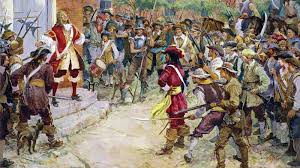
Indentured servitude shaped colonial labor, immigration, and settlement, and helped populate English America. It also formed part of the broader transition from unfree European labor to racial slavery. Indentured servitude is central to understanding colonial labor systems because it linked migration, labor demand, and the development of plantation society. The catalyst for this link began with Bacon’s Rebellion in 1676. This was an uprising in colonial Virginia led by Nathaniel Bacon against Governor William Berkeley. It was sparked by government corruption, heavy taxes, and Berkeley’s refusal to protect frontier settlers from Native American attacks. The rebellion resulted in the burning of Jamestown. It united poor white and Black indentured servants. Terrified by this interracial alliance, the ruling elite sought to divide the lower classes to prevent future uprisings. This fear hastened the transition away from indentured servitude and led to the codification of permanent, race-based slavery.
Resources
You can find some tremendous resources for researching ancestors who were indentured servants. Following are some excellent web resources and databases you can consult.
∎Cyndi’s List: Servitude: Indentures, Serfs, Apprentices, etc. » Indentured Servants: https://www.cyndislist.com/servitude/indentured
Portal to resources dealing with indentured servitude.
∎National Society Descendants of Colonial Indentured Servants: https://www.indenturedservants.org
“An unrepresented population in the hereditary society community” with hope of a better life in the New World. Excellent list of printed and on-line resources.
∎Virtual Jamestown: Registers of Servants Sent to Foreign Plantations: https://www.virtualjamestown.org/indentures/about_indentures.html
Database of over 15,000 indentured servant contracts from London, Middlesex, and Bristol Registers. Contracts indicate servant’s name, length of indenture, name of servant’s parents and owner, home province and city, occupation, destination, and ship of embarkation. Provides detailed composition of indentured servants in 17th-century Atlantic world. Bristol registers also at Ancestry.com and Ancestry Library Edition: https://www.ancestry.com/search/collections/49090/
∎The New Early Settlers of Maryland by Dr. Carson Gibb: https://earlysettlers.msa.maryland.gov
Lists individual settlers named in Maryland land patent volumes from 1633-1683 and one land warrant volume from 1681-1685. Comprises 34,326 entries from Gust Skordas’ Early Settlers of Maryland and Carson Gibb’s Supplement to the Early Settlers of Maryland.
∎Immigrant Servants Database: https://immigrant.pricegen.com
Aims to create a reconstructed passenger arrival list for people who came to colonial America as indentured servants, redemptioners, and transported convicts between 1607 and 1820.
∎American Philosophical Society – Investigating Indentured Servitude: https://diglib-legacy.amphilsoc.org/indenturedata/introduction.html
∎American Philosophical Society – Index to Record of Indentures Bound: https://diglib.amphilsoc.org/islandora/object/islandora%3A10272
Index to record of indentures below.
∎American Philosophical Society – Record of indentures of individuals bound out as apprentices, servants, etc., and of German and other redemptioners, 1771 October 3 – 1773 October 5: https://diglib.amphilsoc.org/islandora/object/text%3A151416
Records of those entering contracts of indentured servitude in Philadelphia 1771-1773. Lists person’s name and details on their profession and on terms of indenture.
∎Encyclopedia Virginia: Indentured Servants in Colonial Virginia: https://encyclopediavirginia.org/entries/indentured-servants-in-colonial-virginia
∎Encyclopedia Virginia: Runaway Slaves and Servants in Colonial Virginia: https://encyclopediavirginia.org/entries/runaway-slaves-and-servants-in-colonial-virginia



Recent Comments