
Substitutes for the (Mostly) Lost 1890 Federal Census
Census records are one of genealogists’ basic tools. They can provide valuable information as well as clues for additional searching. Some states took off-year censuses as well. But what if there’s no census when there should be one?
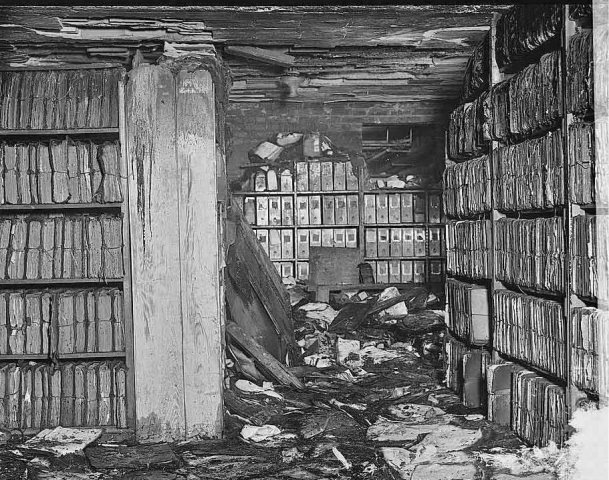
Most of the 1890 federal population schedules were severely damaged when a fire broke out in the basement of the U.S. Department of Commerce building in Washington, DC, on January 10, 1921. Fire, smoke, and firefighting water ruined the records, which had been stored outside a fireproof vault. The catastrophe compounded earlier losses: an 1896 fire had already damaged many of the census’s special schedules. Although fragments of the population schedules and substantial portions of the Civil War veterans’ and widows’ schedule survived, most remaining damaged population records were later disposed of by the federal government in the 1930s. The result is a major documentary gap between the relatively complete 1880 and 1900 federal censuses, especially consequential for genealogical and local-history research. For more information, read the article “‘First in the Path of the Firemen’: The Fate of the 1890 Population Census.”
Substitute records can help bridge the gap left by the missing census. Although they do not contain the same breadth of information as a federal enumeration, they may identify ancestors in a particular locality and offer direct or indirect evidence of their identity, residence, and family relationships. A broad search across many record types improves the likelihood of success, particularly because some sources preserve details never collected by the census. Moreover, many substitute records were created annually, rather than only once every ten years.
State and Territorial Censuses
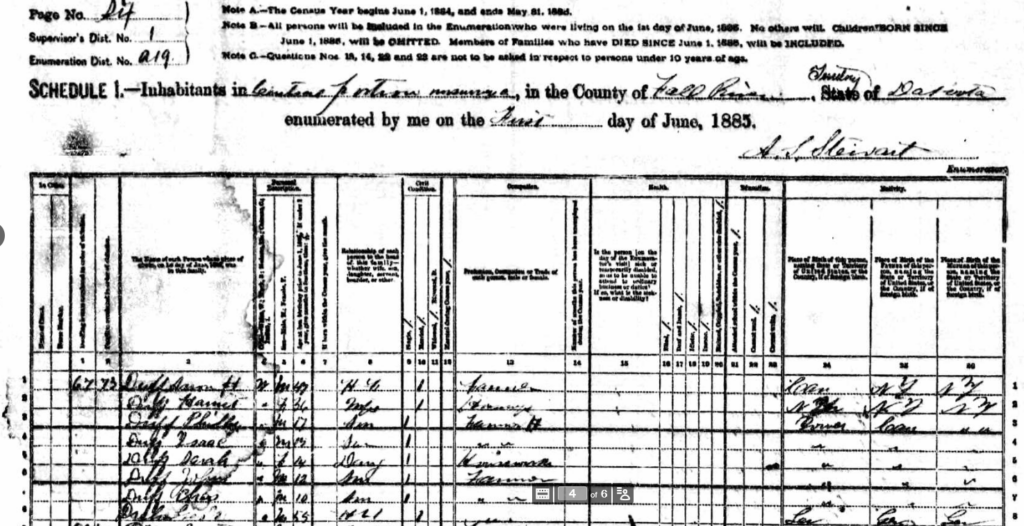
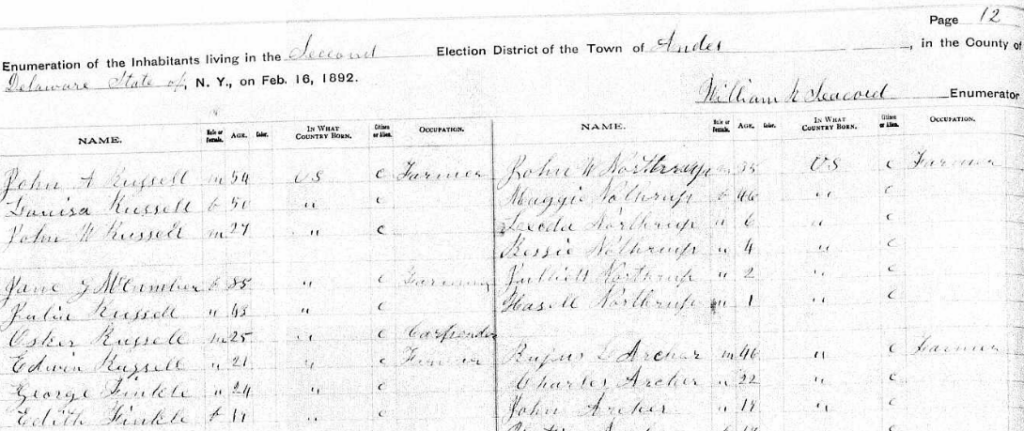
Some state and U.S. territorial censuses cover the 1890 period (Fig. 1). Between 1884 and 1896, thirty-two censuses were conducted in twenty different states and territories. These records can partially compensate for the missing 1890 federal census schedules. The easiest way to learn whether your territory/state took an off-year census and where to find it is to visit the FamilySearch Research Wiki and enter the state name and “census” in the search box.
Tax and Assessment Records
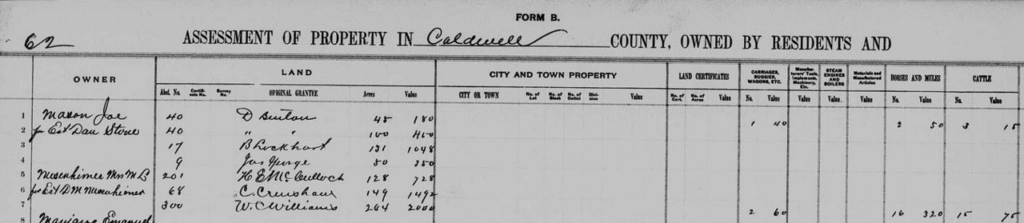
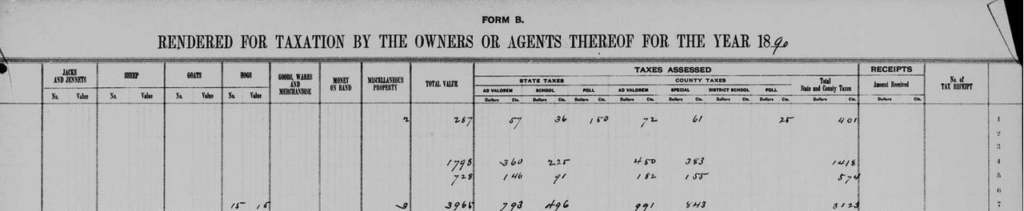
Annual tax lists track household changes, property ownership, and when individuals moved or died. Below are entries from the 1890 assessment of Caldwell County, Texas (Fig. 3). There are separate lists showing owners of Caldwell County property who lived elsewhere. You can get a general idea of a person’s taxable wealth from these records.
City Directories
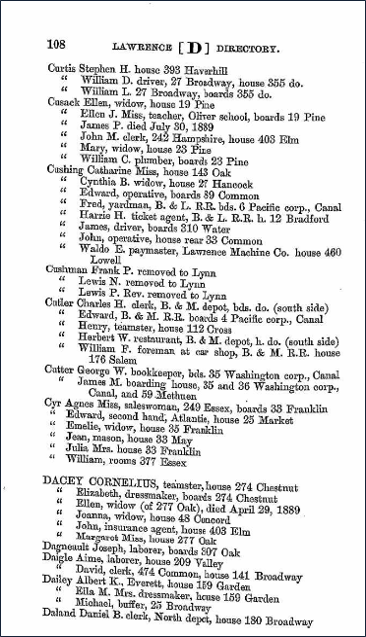
Historical directories list resident names, addresses, occupations (Fig. 4). They can also list deaths and removals that took place the previous year, clues you should use to track individuals and follow up for additional information.
Voter Registration Lists
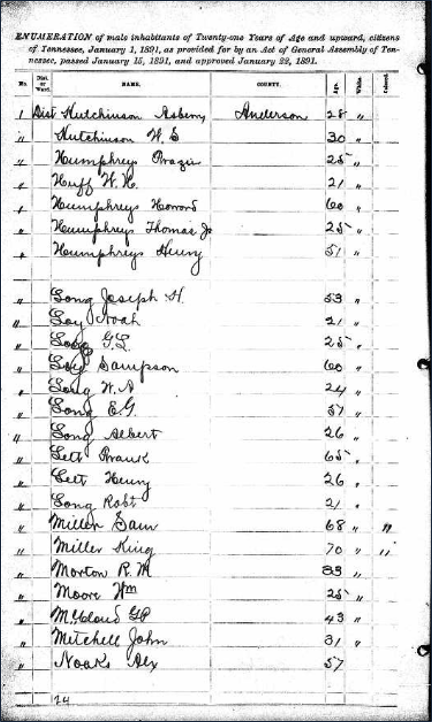
Voting rolls and registers are great records to use as census substitutes, since they will usually contain the names of heads of households and other adults eligible to vote. Content can vary widely from one place to another and from year to year. The Tennessee 1891 census of males over 21 (Fig. 5) shows names, ages, and race for each county, but the 1890 Santa Clara County, California register provides a particular wealth of information about its voters (Fig. 6), including their physical descriptions.

Land and Property Maps
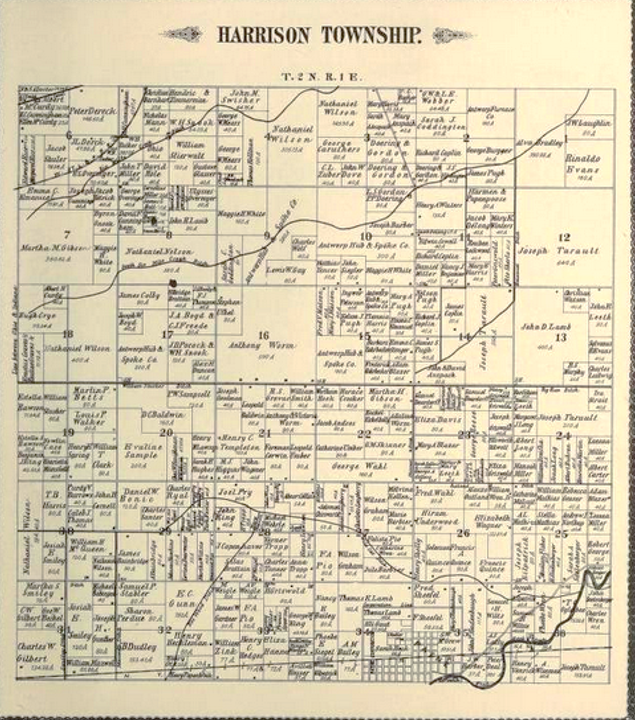
Plat maps, insurance maps, and surveys can identify local property owners/householders in a given place and time. If possible, locate such a map as close to the census year as possible, because it will provide enough information to verify the head of household and address. The plat map of Harrison Township in the 1892 Historical Atlas of Paulding County, Ohio (Fig. 7) is one example.
Military and Special Enumerations
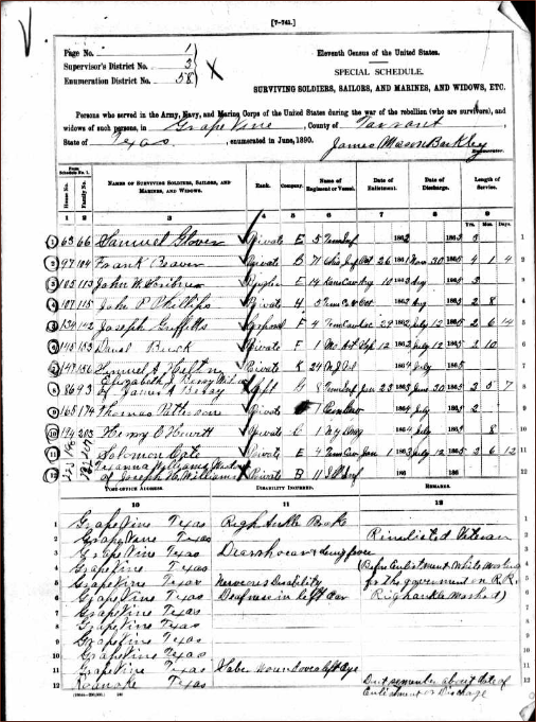
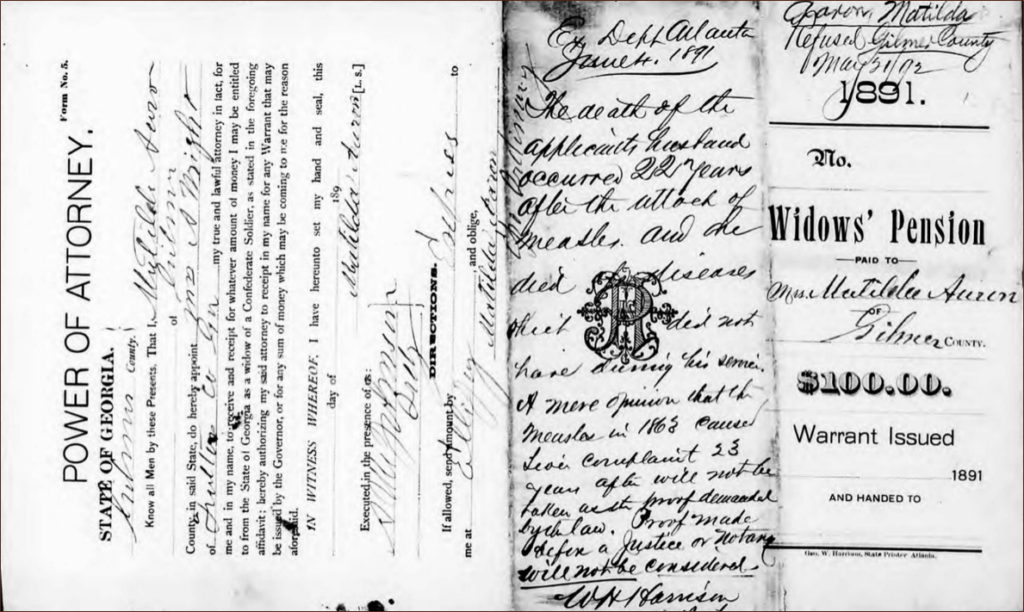
Surviving rosters, draft registrations, state militia lists, and specialized tallies such as the 1890 Census of Union Veterans and Widows (Kentucky to Wyoming) can also place people in a certain place and time, such as the census of Union veterans living in Grapevine, Texas in 1890 (Fig. 8), which provides details of the veteran’s service. Many, but not all, Confederate states passed pension laws close to 1890; North Carolina, 1885; South Carolina, 1887; Virginia, 1888; Mississippi, 1888; Arkansas and Tennessee, 1891; Florida, 1885, and 1889, pensions to their widows; and Texas, 1889. A Confederate veteran could apply for a pension in the former Confederate state in which he was living at the time he applied; he (or his widow) did not have to apply to the state in which he resided when he served (Fig. 9).
Church Records
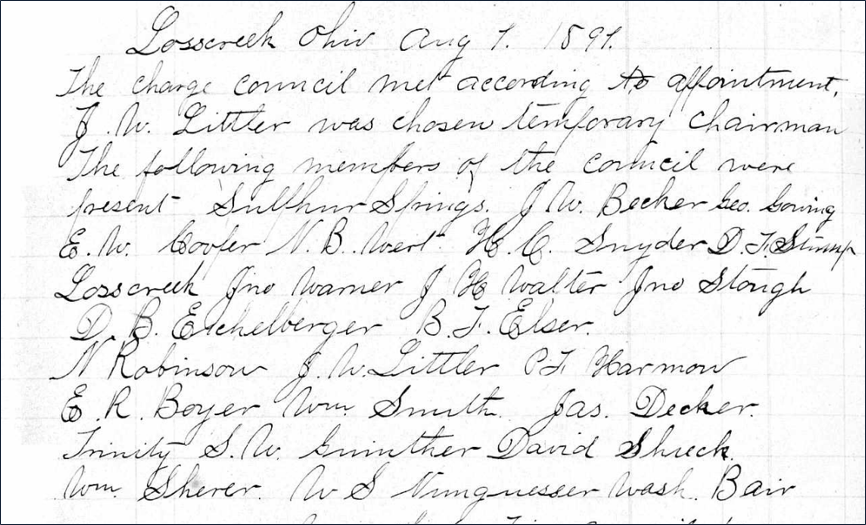
Where they exist, membership lists, baptisms, confirmations, marriages, and records of church officers can serve as census substitutes as well as provide additional information about an ancestor’s religious affiliation (Fig. 10).
School Records
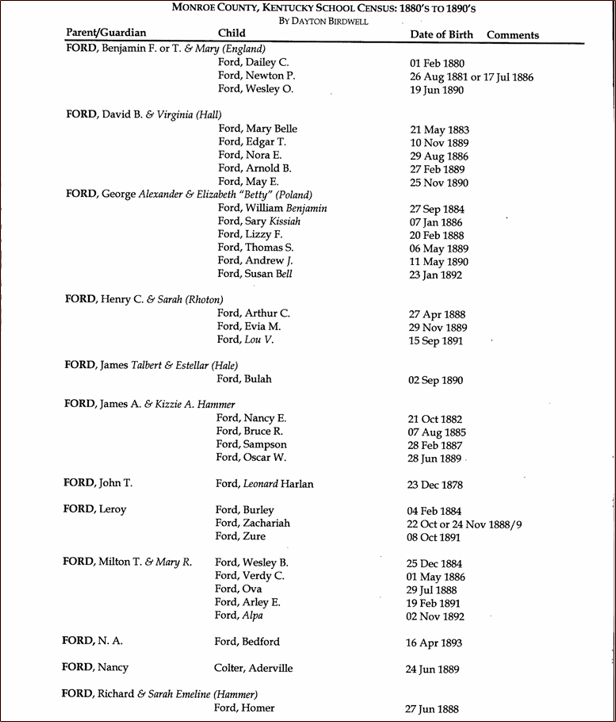
School attendance, graduations, and censuses can also show people in a certain place close to 1890, such as this school census taken in Monroe County, Kentucky (Fig. 11).
Court Records
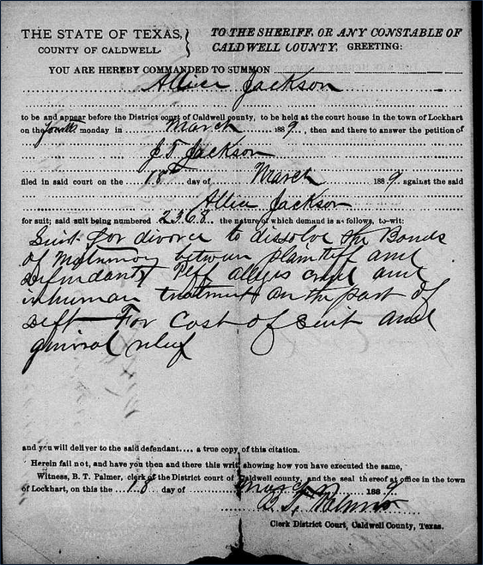
Juror lists, commissions of officials, civil and criminal court cases, naturalizations, probates, estates, wills, and real estate transactions are additional records that can help establish residence around 1890.
Vital Records
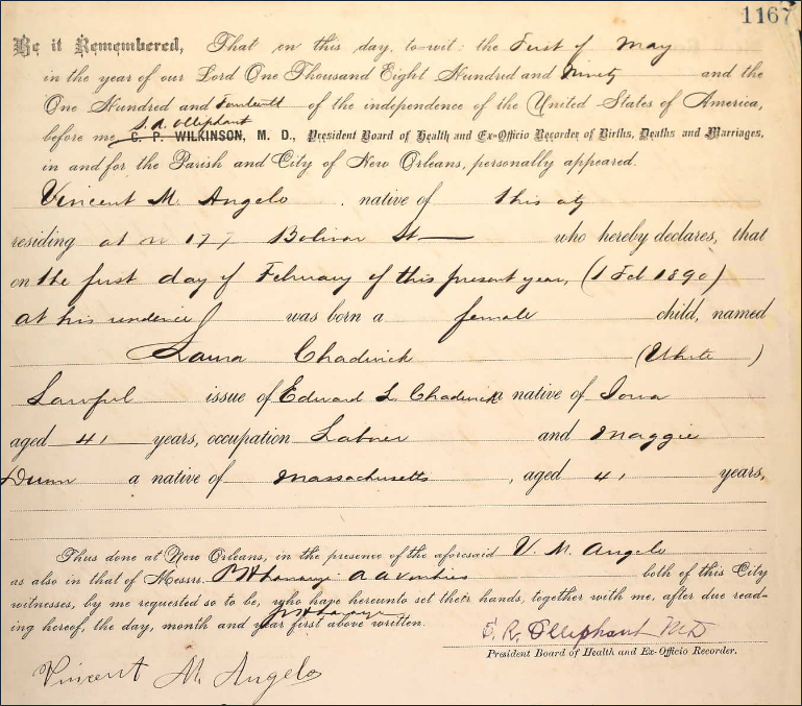
Depending on the time and place, vital records can provide various kinds of information. This 1890 birth record from New Orleans Parish, Louisiana contains valuable genealogical information about the infant and the parents (Fig. 13).
Newspapers
Articles, announcements, and business advertisements in newspapers published around 1890 may also provide proof of residence, as well as a variety of other kinds of information you wouldn’t normally find in a census record. If your town of interest didn’t have a newspaper, check the nearest town or city. Many newspapers have been digitized in subscription databases such as NewspaperArchive.com and Newspapers.com, which you can access for free at Grapevine Library. You may also find free digital newspaper collections created by universities, state archives, and libraries, including the Library of Congress site, Chronicling America, as well as newspaper portals such as The Ancestor Hunt.
So don’t despair! Many other kinds of records exist to help you get past the loss of the 1890 census. This Resource Checklist of genealogically valuable sources from FamilySearch provides you with many possibilities. Utilize as many of them as you can to create the most complete story of your ancestors as possible.



Recent Comments