
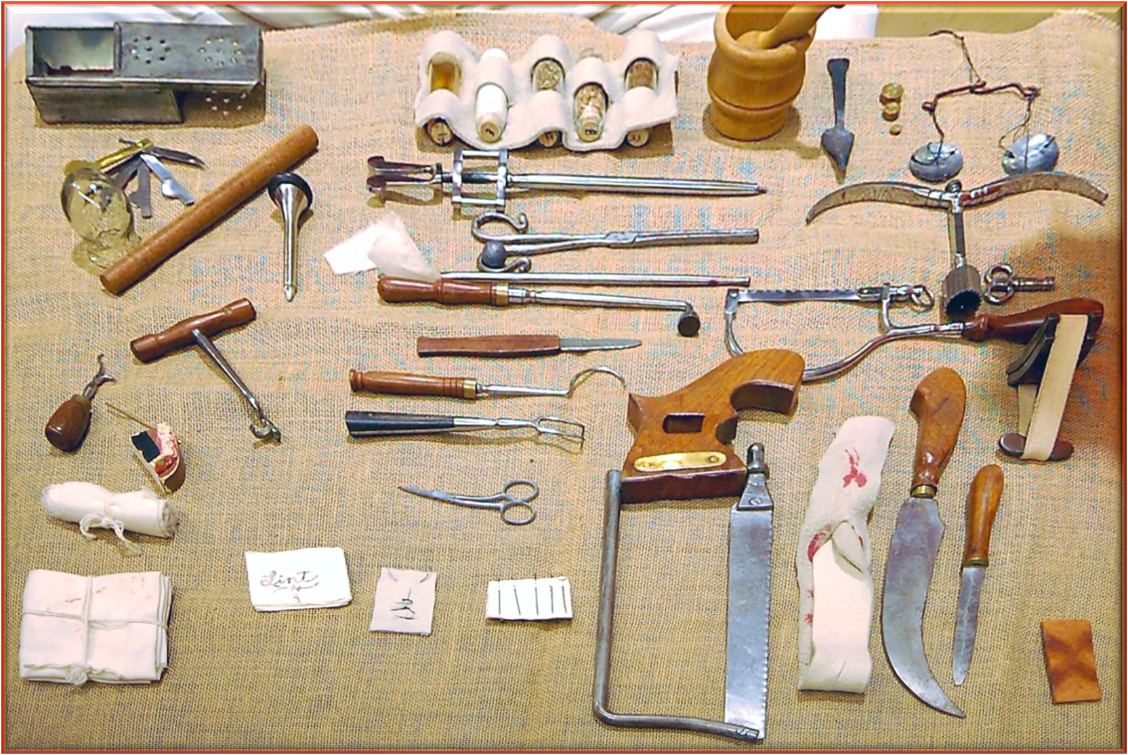
Is There A Doctor in the Camp? A Look at Revolutionary War Medicine
In today’s blog we will discuss Revolutionary War medicine and the important medical records genealogists can use to identify Revolutionary War ancestors. Images of this war often focus on muskets, cannons, and battlefield heroics, but more soldiers in Continental Army and state militias died from disease than from enemy bullets or bayonets. Over eight years, deadly scourges regularly threatened soldiers’ lives because germ theory had not yet been established, and so physicians and caregivers did not understand how microorganisms caused disease or how infections spread. Early Medical Theories and Treatments Medical treatments in the eighteenth century fit the prevailing humoral theory of medicine dating back to the ancient Greeks. Disease was believed to be caused by an imbalance in humors, so sweating, bleeding, or other purging would remove excess and restore health. Humoral theory (or humorism) was an ancient medical system first advanced by Hippocrates, then by Galen, a Greek...

Recent Comments